
When Two Worlds Meet on Your Plate: Exploring Cultural Fusion Through Food
Stand at the intersection of two culinary traditions and you’ll discover something magical: the moment when grandmother’s recipe meets a neighbor’s spice blend, when immigration reshapes a city’s food landscape, when respect and curiosity transform ingredients into conversation. This is where authentic cultural fusion lives, not in trendy restaurant concepts, but in the everyday exchanges happening across kitchen tables, market stalls, and community gatherings throughout Canada and beyond.
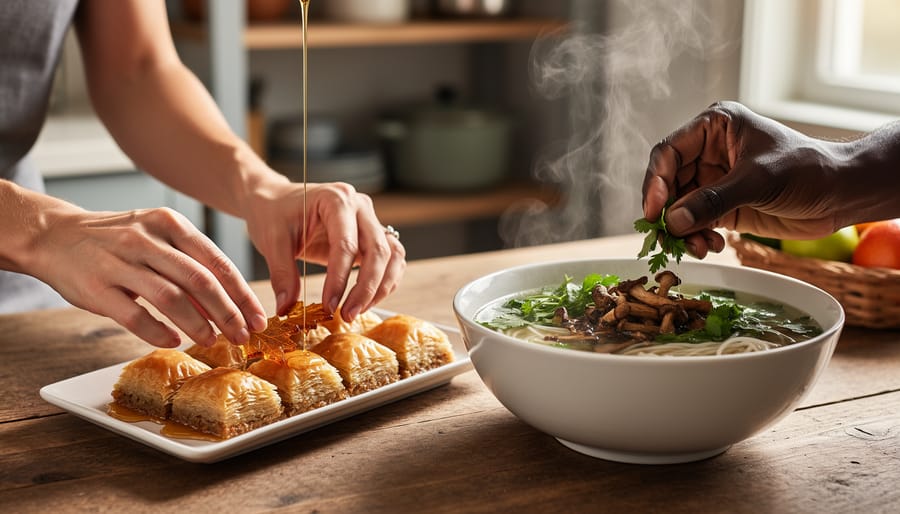
Cultural fusion in food tells migration stories through flavor profiles. It reveals how communities adapt, preserve, and celebrate their heritage while embracing new influences. When Syrian bakers in Montreal incorporate maple syrup into traditional pastries, or when Vietnamese-Canadian chefs reimagine pho with locally foraged ingredients, they’re not diluting authenticity—they’re documenting the living, breathing evolution of culture itself.
But capturing these stories requires more than just photographing colorful dishes or listing exotic ingredients. It demands genuine engagement with the people behind the food, understanding the historical context that brought these cultures together, and recognizing the difference between appreciation and appropriation. The challenge lies in moving beyond surface-level tourism to discover the real narratives: the Tamil grandmother teaching her granddaughter to make dosas in suburban Toronto, the Ukrainian-Japanese family celebrating both traditions at their dinner table, the Indigenous chef reclaiming ancestral ingredients through modern techniques.
This journey into cultural fusion asks you to slow down, listen deeply, and approach every encounter with humility. The most powerful food stories emerge when you become a respectful observer and participant rather than just a consumer collecting experiences.
What ‘2 Cultures’ Really Means in Food Blogging
When I first started exploring food stories across Canada, I kept hearing people talk about “fusion cuisine” – that trendy mashup of flavors from different culinary traditions. But what I’ve discovered through countless conversations with home cooks, chefs, and families is something far more profound. The “2 cultures” experience in food blogging isn’t about clever menu innovations or Instagram-worthy plating. It’s about the deeply personal navigation between two worlds that many people live every single day.
Think about the Vietnamese-Canadian grandmother who makes traditional pho but substitutes ingredients she can actually find at her local grocery store. Or the Italian immigrant in Toronto who bakes her nonna’s biscotti recipe while her Canadian-born daughter requests chocolate chip cookies for her school bake sale. These aren’t fusion trends – they’re real stories of adaptation, memory, and belonging.
The kitchen becomes a bridge between who we were and who we’re becoming, where heritage and home find their common language.
This distinction matters enormously for authentic storytelling. Fusion cuisine often comes from a place of experimentation and creativity, which is wonderful, but cultural duality springs from necessity, nostalgia, and identity. It’s the teenager who packs samosas for lunch at her Canadian school, navigating curious stares while staying connected to her family’s traditions. It’s the second-generation Ukrainian-Canadian who only makes pierogies at Christmas because that’s when his mother taught him, preserving a ritual that anchors him to roots he’s never physically touched.
Understanding this difference transforms how we approach food blogging. Instead of simply photographing a beautiful dish, we’re documenting the invisible threads connecting people to their past while they build their present. We’re witnessing resilience, love, and cultural survival served on everyday plates. That’s the story worth telling.
Canada’s Perfect Storm for Cultural Collision
The Immigrant Kitchen: Where Tradition Meets Adaptation
I’ll never forget stepping into my neighbor Amara’s kitchen in Toronto, where the aroma of Ethiopian berbere spice mingled with the unmistakable scent of Canadian maple syrup. She was making doro wat, her grandmother’s chicken stew recipe, but with a sweet twist that would have scandalized purists back in Addis Ababa. “My kids needed something familiar when we arrived,” she explained, stirring the pot with practiced hands. “Now they won’t eat it any other way.”
This is the beautiful contradiction of immigrant kitchens across Canada. Walk through Vancouver’s Richmond neighborhood and you’ll find Chinese families substituting local Dungeness crab for their traditional varieties. In Montreal, a Lebanese baker told me how Quebec butter transformed her ma’amoul cookies into something richer than her childhood memories, creating a new tradition her Canadian-born children now consider authentic.
These adaptations aren’t compromises; they’re creative solutions born from necessity and love. When Mrs. Patel couldn’t find curry leaves in her small Prairie town, she discovered that local bay leaves offered an interesting alternative. Her daughter now grows both in their garden, honoring grandmother’s recipes while celebrating their Canadian reality.
The immigrant kitchen becomes a laboratory where memory and availability negotiate. It’s where turmeric meets canola oil, where corn tortillas embrace Ontario peaches, and where recipes evolve into something that belongs completely to both worlds, yet exists nowhere else.
Second-Generation Innovators
There’s something particularly beautiful about watching someone who grew up navigating two worlds bring those experiences into the kitchen with intention and pride. These second-generation innovators aren’t accidentally blending cultures – they’re thoughtfully crafting bridges between their heritage and the place they call home.
Take Montreal’s Liu Wong Food, where Feigang Fei creates Sichuan-Jewish fusion that might sound unlikely until you taste his matzo ball soup with numbing Sichuan peppercorns. Growing up in both traditions, he saw connections others missed. Or consider Vancouver’s Angus An at Maenam, who transformed his childhood experience of Thai-Canadian duality into refined dishes that honor traditional techniques while embracing local West Coast ingredients.
These chefs and home cooks have lived the hyphenated identity. They remember grandparents speaking in mother tongues at Sunday dinners, then switching to English at the grocery store. They’ve navigated cultural expectations at home and Canadian social norms outside. This lived experience gives them unique insight – they know both cultures deeply, not as observers but as participants.
I’ve interviewed second-generation cooks who describe their cooking as “finally making peace” with straddling two worlds. They’re creating the food they wished existed growing up – dishes that don’t choose between cultures but celebrate both. When documenting these stories, listen for those moments of recognition and reconciliation. That’s where the real magic lives.
Capturing 2-Culture Stories Through Your Lens
When I’m photographing cultural intersections, I always remind myself that I’m not just documenting a plate of food or a street scene—I’m capturing the conversation between two worlds. Your camera becomes a bridge, and the images you create should tell the story of how these cultures dance together, not just coexist.
Start by observing before you shoot. I learned this while photographing a Vietnamese-French bakery in Montreal, where the owner’s grandmother was teaching her granddaughter to make both banh mi and baguettes side by side. The magic wasn’t in the perfect overhead shot of finished products—it was in their hands working the dough together, their contrasting techniques, the steam rising from both ovens simultaneously. Look for these layered moments that reveal the human connection behind cultural fusion.
Natural light is your best friend when documenting authentic cultural spaces. I avoid using flash in restaurants and markets because it disrupts the intimate atmosphere and can make people uncomfortable. Instead, I increase my ISO and shoot with a wide aperture, embracing the warm, ambient glow of kitchen lights or the soft morning sun filtering through market stalls. This approach captures the genuine mood of a space rather than creating an artificial, staged feeling.
Details matter enormously in cultural storytelling. Yes, capture the wide establishing shots, but don’t forget the close-ups that reveal character: weathered hands preparing traditional ingredients with modern tools, vintage family photos hanging beside contemporary art, handwritten recipe cards in two languages, the patina on a well-used cooking pot. These textures and details ground your story in authenticity.
Engage with the people you’re photographing. I always ask permission, even when shooting in public markets. This simple gesture of respect often leads to richer stories and better images. When photographing the owner of a fusion restaurant, I’ll ask about their inspiration, their family background, their favourite ingredient that bridges both cultures. Their answers inform how I frame my shots and what elements I emphasize.
Consider shooting in sequences that show process rather than just final results. Document the transformation: raw ingredients from different culinary traditions, the cooking methods that blend techniques, the plating that honours both aesthetics, and finally, people enjoying the meal together. This narrative arc helps viewers understand the intentionality behind cultural fusion rather than seeing it as random combination.
Remember that lighting, composition, and timing all contribute to emotional resonance. The best 2-culture photographs make viewers feel something—curiosity, hunger, connection, recognition. They should inspire people to seek out these experiences themselves, to taste that fusion dish, to visit that neighbourhood, to appreciate the beautiful complexity that happens when cultures meet with mutual respect.
Where to Find Authentic 2-Culture Experiences in Canada
Markets That Tell Migration Stories
I’ll never forget the morning I wandered through Kensington Market in Toronto, watching a Jamaican grandmother haggle in Cantonese with a Chinese fishmonger. This is where Canada’s cultural stories unfold in the most delicious ways.
At Jean-Talon Market in Montreal, you’ll find Lebanese vendors perfecting tourtière alongside their za’atar bread, while Vietnamese families sell traditional bánh mì stuffed with Quebec maple-glazed pork. The air mingles with the scent of fresh mint from Middle Eastern stalls and the sweet tang of Quebec strawberries. Look for the vendors who’ve been there for decades—they’re the ones whose displays tell the richest stories, where Asian greens nestle beside French cheeses and Italian salami shares space with South Asian spices.
Vancouver’s Granville Island offers another beautiful study in adaptation. Watch the Filipino vendors selling longanisa alongside Canadian bacon, or the Japanese bakery that’s mastered both mochi and maple butter tarts. The best time to visit is early Saturday morning when locals shop—that’s when you’ll see the real cultural exchange happening.
What should you look for? Products with bilingual labels that hint at unexpected flavor combinations. Vendors who can explain their ingredients in multiple languages. The grandmother teaching her Canadian-born granddaughter traditional recipes. These markets aren’t performing for tourists; they’re living, breathing examples of how cultures genuinely blend when people build new lives together.
Festival Food: Celebration Meets Innovation
There’s something magical about stumbling upon a cultural festival in full swing. I’ll never forget my first visit to Toronto’s Taste of the Danforth, where the aroma of grilling souvlaki mingled with innovative Greek-Canadian fusion dishes that would make your grandmother proud and curious all at once. These celebrations offer front-row seats to food evolution in action.
At Montreal’s Japanese Matsuri Festival, I watched master chefs demonstrate traditional mochi-making techniques passed down through generations, while food trucks nearby served matcha poutine that perfectly captured the essence of cultural innovation. It’s this beautiful dance between preservation and creativity that makes festival foods so compelling.
Vancouver’s Vaisakhi parade showcases this perfectly—traditional Punjabi dishes prepared in massive community kitchens honour centuries-old recipes, while local chefs reimagine classics with Pacific Northwest ingredients. The jalebi I tasted there, infused with maple syrup instead of traditional sugar syrup, sparked conversations about identity, adaptation, and what it means to honour your roots while planting new ones.
These festivals aren’t just about eating; they’re living museums where food tells migration stories, celebrates resilience, and invites everyone to taste the future being created today.
Writing About 2 Cultures Without Appropriating or Stereotyping
When I first started documenting cultural fusion experiences, I made mistakes. I remember gushing about a “traditional” dish without realizing it was actually a modern interpretation, or using phrases like “exotic flavors” that, while well-intentioned, reduced complex culinary traditions to otherness. The truth is, writing about cultural intersections requires constant learning and humility.
The most important principle is recognizing that you’re a guest in someone’s cultural story. When you encounter a restaurant blending two traditions, do the research. Who created this fusion? What’s their connection to these cultures? A third-generation Japanese-Canadian chef creating nikkei cuisine has a different relationship to that fusion than a chef with no cultural ties experimenting with flavor combinations. Both can create delicious food, but the context matters for your storytelling.
Always give credit where it’s due. If a Punjabi-Canadian family shared their immigration story and how it influenced their menu, name them. Quote them directly. Link to their business. Your platform can amplify voices that deserve to be heard, rather than extracting stories for content without acknowledgment.
Watch your language carefully. Avoid words like “exotic,” “ethnic,” or “authentic” without context. Instead, be specific. Rather than calling a dish “authentic Mexican-Korean fusion,” describe what makes it special: “Chef Maria combines the smoky complexity of her grandmother’s mole with gochugaru she discovered during culinary school in Seoul.” Let the details do the work.
Challenge yourself to move beyond surface-level observations. Don’t just photograph colorful dishes and call it cultural appreciation. Talk to people. Understand the why behind the fusion. What historical migrations created this blend? What personal journey led to this menu? These layers transform your content from appropriation to celebration.
Remember that no culture is monolithic. Canada’s Chinese community isn’t uniform, nor is its Italian community. Regional differences, generational perspectives, and individual interpretations all exist within cultural groups. Avoid sweeping statements like “Chinese people love” or “Italian tradition dictates.” Instead, share specific experiences: “In Vancouver’s Chinatown, I met three dumpling makers who each learned different folding techniques from their families.”
When you approach cultural storytelling with curiosity, respect, and accountability, your writing becomes richer and more meaningful. You’re not just documenting what you ate, you’re honoring the human stories behind every plate.
The Dishes That Define Cultural Duality
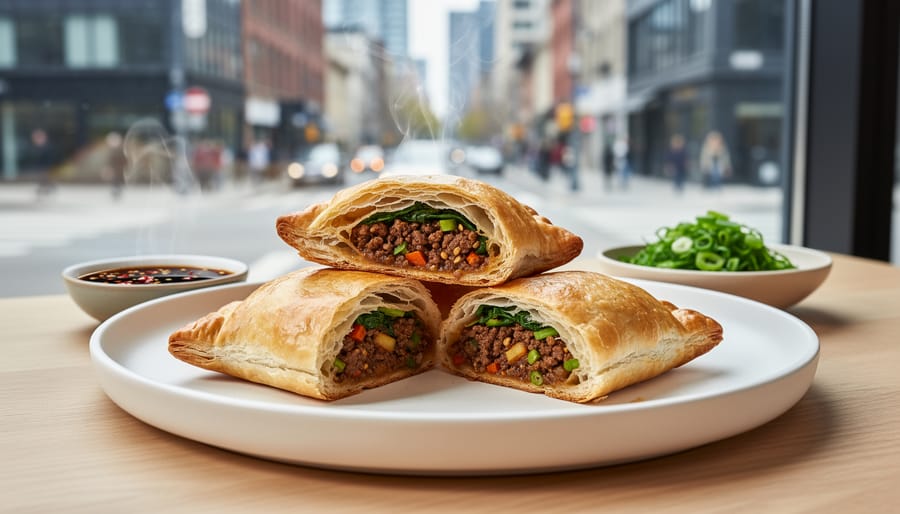
Walking through Toronto’s vibrant Scarborough neighborhood, I stumbled upon something that stopped me in my tracks: a Jamaican-Chinese patty shop where Caribbean spice met Cantonese technique in the most glorious way. The golden, flaky pastry held curried beef with just the right amount of heat, but the texture and craftsmanship told a story of Chinese bakery traditions. This wasn’t fusion for fusion’s sake—it was the edible history of two communities who’d lived, worked, and created together for generations.
These dishes of cultural duality exist throughout Canada, each one a delicious testament to the conversations that happen when communities intersect. They’re not typically found in trendy fusion restaurants dreamed up by marketing teams. Instead, they emerge organically from neighborhoods where people share recipes over backyard fences, where restaurant workers swap techniques during late-night shifts, and where home cooks adapt family traditions to new ingredients and new friends.
- Jamaican-Chinese Patties
- Born from Caribbean and Cantonese communities working side-by-side in Toronto and Vancouver, these flaky pastries combine Chinese baking techniques with Jamaican curried fillings. Find them at community bakeries throughout Scarborough and select shops in East Vancouver.
- Indigenous-Influenced Fine Dining
- Contemporary Canadian restaurants are collaborating with Indigenous knowledge keepers to create dishes featuring traditional ingredients like wild berries, cedar, and bison alongside European techniques. Experience this at establishments like Kekuli Café in British Columbia or venues participating in the Indigenous culinary movement across the country.
- Vietnamese-Québécois Bánh Mì
- Montreal’s Vietnamese community has created a distinctly local version of this classic sandwich, incorporating Québécois ingredients like local pâtés and maple-glazed proteins alongside traditional Vietnamese pickles and herbs. Seek them out in the Côte-des-Neiges and Villeray neighborhoods.
- Ukrainian-Prairie Perogies
- Generations of Ukrainian settlers in the Canadian prairies have adapted their traditional dumplings using local ingredients, creating versions filled with wild game, Indigenous three sisters vegetables, or Saskatchewan-grown grains. Sample authentic versions at community halls and festivals throughout Alberta, Saskatchewan, and Manitoba.
What strikes me most about these dishes is how they refuse to fit into neat categories. The Vietnamese-Québécois bánh mì I devoured in Montreal’s Côte-des-Neiges neighborhood featured maple-glazed pork alongside traditional cilantro and daikon, a combination that somehow honored both culinary traditions while creating something entirely new. The vendor told me her mother started making them this way in the 1980s, using what was available and delicious, never thinking she was creating anything revolutionary.
The next time you find yourself wandering through a new city or exploring a familiar neighbourhood with fresh eyes, I encourage you to look for these beautiful cultural intersections on every menu and street corner. The stories behind 2-culture foods are waiting to be discovered, tasted, and shared—and they offer something far more meaningful than just a memorable meal.
These culinary crossroads teach us that culture isn’t static. It breathes, adapts, and transforms through every immigration wave, every friendship across borders, and every cook willing to honour tradition while embracing innovation. When you sit down to enjoy Vietnamese pho in Montreal or sample bannock tacos at an indigenous food truck, you’re participating in an ongoing conversation between communities, generations, and histories.
I’ve found that approaching these experiences with genuine curiosity and respect opens doors you never knew existed. Ask questions. Listen to the stories. Photograph not just the finished dish, but the hands that prepare it, the spaces where cultures meet, and the faces that light up when sharing their heritage. These moments of connection have enriched my travels in ways no guidebook ever could.
So here’s my challenge to you: seek out the fusion, the adaptation, the beautiful collision of culinary traditions in your next adventure. Whether you’re exploring Canada’s diverse food scene or travelling halfway around the world, let these 2-culture experiences guide you toward deeper understanding. Taste with intention. Photograph with sensitivity. Share these stories with appreciation for the resilience and creativity they represent. Because every bite tells a story of movement, survival, and the universal human desire to make a new place feel like home.