
12 Best Canadian Foods You Must Try in 2026, Ranked
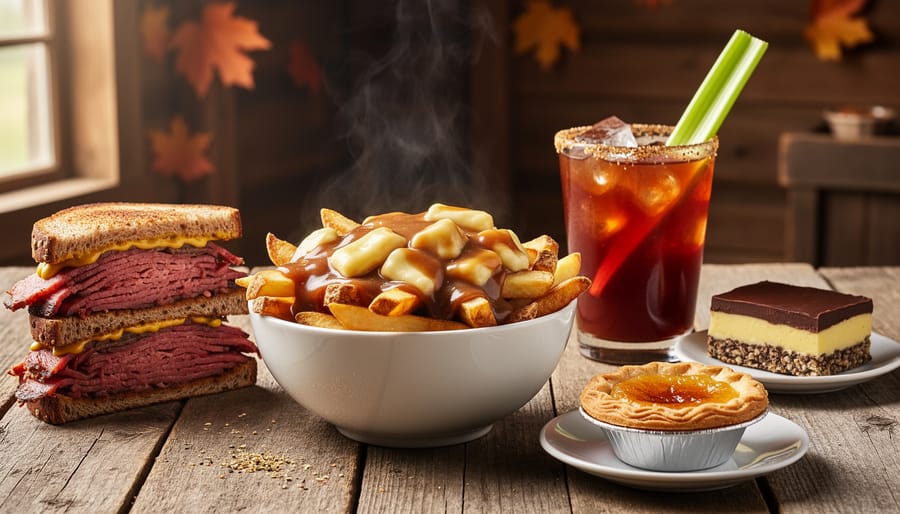
Canada’s culinary identity spans twelve iconic dishes, from golden poutine drenched in gravy to flaky butter tarts and Montreal’s towering smoked meat sandwiches. These foods tell the story of a nation shaped by Indigenous traditions, French and British settlers, and waves of immigration that turned regional specialties into national treasures.
I’ve chased the perfect poutine across Quebec, bitten into fresh-off-the-dock fish and chips in Newfoundland, and watched my fingers turn sticky with maple taffy on snow in a sugar shack outside Montreal. What makes Canadian food special isn’t just taste. It’s the way a Nanaimo bar connects you to Vancouver Island’s mining history, or how bannock bridges thousands of years of Indigenous foodways with modern creativity.
This ranking weighs cultural significance, availability across the country, and that indefinable quality that makes a dish worth planning a trip around. Some foods on this list, like tourtière and Jiggs dinner, remain fiercely regional. Others, like ketchup chips and Caesar cocktails, have quietly become part of the national fabric without much fanfare beyond our borders.
You won’t find fusion experiments or chef-driven reinterpretations here. These are the dishes Canadians grow up eating, argue about, and crave when they’re far from home. They’re messy, comforting, and unapologetically themselves, much like the country that created them.
How I Selected Canada’s Best Foods
Selecting Canada’s best foods meant balancing tradition with taste, authenticity with accessibility. I focused on dishes that tell a story about Canada’s culinary identity, foods shaped by Indigenous traditions, French and British colonial influence, immigrant communities, and regional ingredients. Cultural significance mattered: these aren’t just popular items, they’re dishes Canadians point to with pride, foods that spark nostalgic conversations and regional debates (raisins in butter tarts, anyone?).
I prioritized regional diversity to showcase Canada’s vast geography, from Atlantic lobster to Pacific salmon, Quebec’s French-inspired classics to Indigenous bannock. Every food on this list earned its place through personal tasting experiences across Canadian cities, recommendations from local chefs and food artisans I’ve interviewed during my travels, and guidance from trusted regional food guides. I chose foods you can actually find and enjoy, whether at a roadside stand, neighborhood bakery, or iconic urban food market.
Authenticity was non-negotiable. I looked for the real deal: bagels from wood-fired Montreal ovens, lobster from Maritime waters, maple syrup from Quebec sugar shacks. This ranking reflects what makes Canadian food distinctive, not what’s simply available in Canada.
Essential Canadian Food Terms to Know
Before you dive into Canada’s best dishes, knowing a few local food terms will make your culinary adventures smoother and help you chat confidently with locals at markets, cafés, and diners across the country.
- Double-Double
- A Tim Hortons coffee with two creams and two sugars. This phrase has become universal across Canada, and you’ll hear it everywhere from Vancouver to Halifax.
- Bannock
- Indigenous flatbread that can be fried, baked, or cooked over an open fire. You’ll find both traditional and modern versions at restaurants and food festivals.
- Tourtière
- A spiced meat pie from Quebec, typically filled with pork, beef, or game. Recipes vary by region and family tradition.
- Poutine
- Fries topped with cheese curds and gravy. Authentic poutine requires squeaky fresh curds that maintain their texture under the hot gravy.
- Peameal Bacon
- Wet-cured pork loin rolled in cornmeal, known as Canadian bacon elsewhere. It’s leaner and sweeter than traditional bacon strips.
- Caesar
- Canada’s national cocktail made with vodka, Clamato juice, hot sauce, and Worcestershire sauce. Not to be confused with a Bloody Mary.
- Ketchup Chips
- Potato chips flavored with tangy tomato seasoning. This distinctly Canadian snack surprises many visitors with its bold, sweet-savory taste.
- All-Dressed
- Chips or pizza combining multiple flavors at once: usually ketchup, barbecue, sour cream, and salt and vinegar. It’s a maximalist approach that Canadians embrace wholeheartedly.
These terms pop up constantly in Canadian food culture, from casual conversations to restaurant menus. Mastering them early means you’ll order like a local and catch the cultural references that make Canadian dining experiences richer and more connected to the people and places you’re visiting.
1. Poutine, Quebec’s Gravy-Drenched Icon
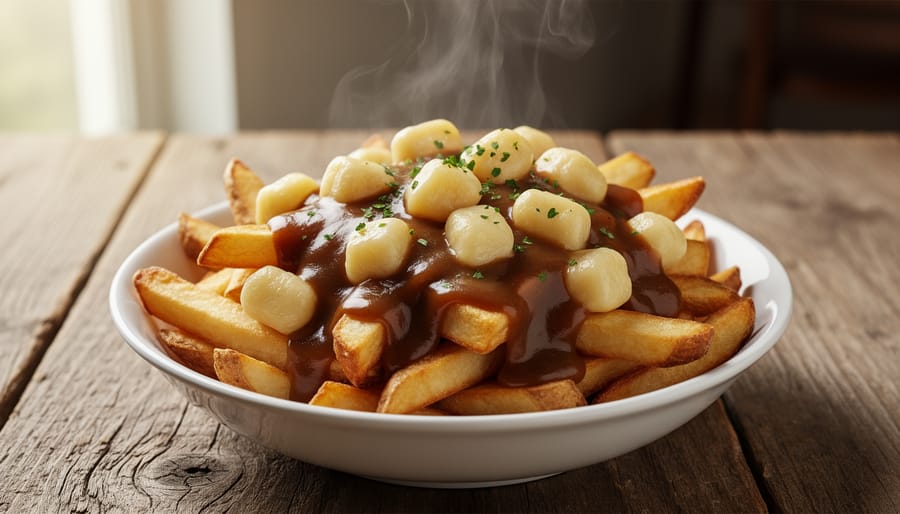
The first time I ordered poutine at a late-night diner in Montreal’s Plateau neighborhood, I understood why Quebecers consider this dish sacred. The server placed a steaming bowl before me, and I watched the rich brown gravy melt into fresh cheese curds that squeaked audibly against my fork. One bite of those crispy fries beneath the savory blanket convinced me this wasn’t just comfort food, it was edible poetry.
Authentic poutine demands three non-negotiable elements. The fries must be thick-cut and double-fried to stay crispy under the gravy’s weight. The cheese curds need to be fresh enough to squeak when you bite them, typically less than a day old. The gravy should be a well-seasoned, chicken or beef-based sauce, served piping hot to partially melt the curds while leaving them intact. Compromise on any component and you’ve got dressed fries, not true poutine.
La Banquise in Montreal remains my benchmark, open 24 hours with over 30 variations, though their classic version sets the standard. Poutineville offers creative twists like pulled pork or smoked meat toppings. Outside Quebec, look for places advertising fresh curds, frozen ones won’t deliver that essential squeak.
While purists debate whether toppings beyond the holy trinity belong, I’ve found excellent smoked meat poutine and even lobster versions that honor the original while pushing boundaries. The key is respecting that foundation of fries, curds, and gravy that makes poutine unmistakably Canadian.
2. Montreal-Style Bagels, Sweeter, Denser, and Wood-Fired
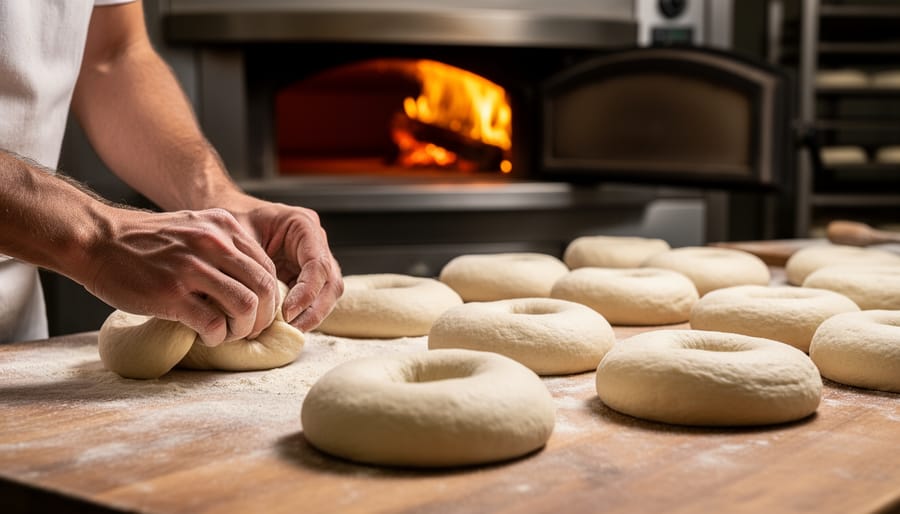
I first tasted a real Montreal bagel on a drizzly morning in the Mile End, standing outside St-Viateur while the wood-fire smoke curled into the street. The woman behind the counter handed me a sesame bagel still warm from the oven, and I understood immediately why Montrealers get defensive about their bagels.
Montreal bagels are smaller, denser, and noticeably sweeter than their New York cousins. The dough contains eggs and honey instead of salt, creating a slightly sweet flavor that pairs beautifully with cream cheese or smoked salmon. Each bagel is hand-rolled into its distinctive ring shape, boiled briefly in honey-sweetened water, then baked in a wood-fired oven that reaches temperatures New York’s steam ovens can’t match.
The wood fire makes all the difference. It creates a thin, crackly crust with a subtle smokiness, while the interior stays chewy and dense. At Fairmount Bagel, I watched bakers work through the night, pulling golden rings from the flames with long wooden paddles, maintaining a rhythm unchanged since 1919.
The two iconic shops, St-Viateur and Fairmount, have friendly rivalry spanning decades. Both stay open 24 hours, both use wood ovens, and both inspire fierce loyalty. My advice? Try both, eat them fresh, and skip the toasting.
3. Butter Tarts, Ontario’s Sweet Legacy
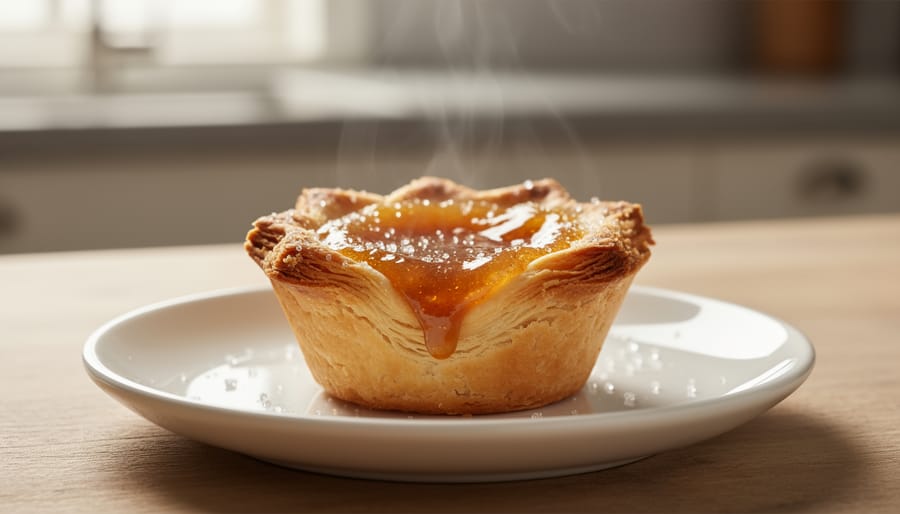
I still remember biting into my first butter tart at a roadside bakery in Muskoka, utterly unprepared for the explosion of sweet, buttery filling that oozed onto my fingers. The flaky pastry shell shattered perfectly, revealing that signature gooey centre that defines Ontario’s beloved contribution to Canadian dessert.
The great butter tart debate centres on one polarizing ingredient: raisins. Purists insist on them, while others prefer pecans or a plain, unadulterated filling. I’ve tasted dozens across Ontario, and honestly, the real magic lies in that perfect balance of butter, brown sugar, and eggs creating a semi-liquid centre that’s neither too runny nor too firm.
What makes butter tarts special is their simplicity. Just a handful of ingredients transformed into something genuinely addictive. The best versions have shells that stay crisp despite the moisture, with filling that pools slightly when you break through the crust.
For authentic experiences, skip the grocery store versions. Small-town bakeries across Ontario guard their recipes fiercely. I’ve found exceptional tarts in places like Perth, Midland, and throughout Prince Edward County. Each baker has their own twist, but that buttery, caramelized sweetness remains wonderfully consistent.
4. Tourtière, Quebec’s Spiced Meat Pie
I first tasted authentic tourtière on a snowy December evening in Quebec City, when my Airbnb host insisted I try her grandmother’s recipe. One bite of that warm, flaky crust filled with seasoned pork and I understood why this meat pie has anchored French-Canadian holiday tables for generations.
What sets tourtière apart is the warming spice blend, cinnamon, cloves, allspice, and sometimes nutmeg, that transforms ground pork into something deeply aromatic and comforting. The meat filling varies by region and family tradition. In Lac-Saint-Jean, tourtière takes the form of a deep-dish pie layered with cubed meat and potatoes. Along the St. Lawrence, you’ll find flatter versions with finely ground pork, veal, or game meat.
While tourtière remains Christmas Eve tradition for many Quebecois families, served after midnight mass, you’ll find it year-round in bakeries and bistros across Quebec. The best versions balance rich, spiced meat with a buttery, tender crust that shatters at the first forkful.
Look for tourtière at Jean-Talon Market in Montreal or small-town boulangeries throughout Quebec’s Charlevoix region, where recipes have passed down through centuries of French-Canadian heritage.
5. Bannock, Indigenous Bread with Deep Roots
Bannock carries layers of history that go far deeper than its simple ingredients. This flatbread, traditionally made from flour, water, salt, and lard or butter, has been central to Indigenous communities across Canada for generations, though its exact origins spark ongoing discussion among food historians. What matters most is that bannock became a cultural touchstone, adapting to available ingredients while maintaining its role in gatherings, ceremonies, and daily life.
I first tasted authentic bannock at a pow wow in Winnipeg, where an elder cooked it over an open fire in a cast-iron skillet. The exterior turned golden and slightly crisp while the inside stayed soft and warm. That contrast, paired with wild berry jam, revealed why this bread has endured.
Traditional methods vary by region and community. Some prepare it as fried bread in hot oil, creating puffy, airy rounds. Others bake it in ovens or cook it on sticks over campfires, letting smoke add subtle flavour. Modern Indigenous chefs now incorporate bannock into restaurant menus, stuffing it with bison, topping it with smoked salmon, or serving sweet versions with Saskatoon berries.
You’ll find excellent bannock at Vancouver’s Salmon n’ Bannock Bistro, Toronto’s NishDish, and during cultural festivals across the country where Indigenous communities share their culinary traditions directly.
6. Maple Syrup, Liquid Gold from Eastern Forests
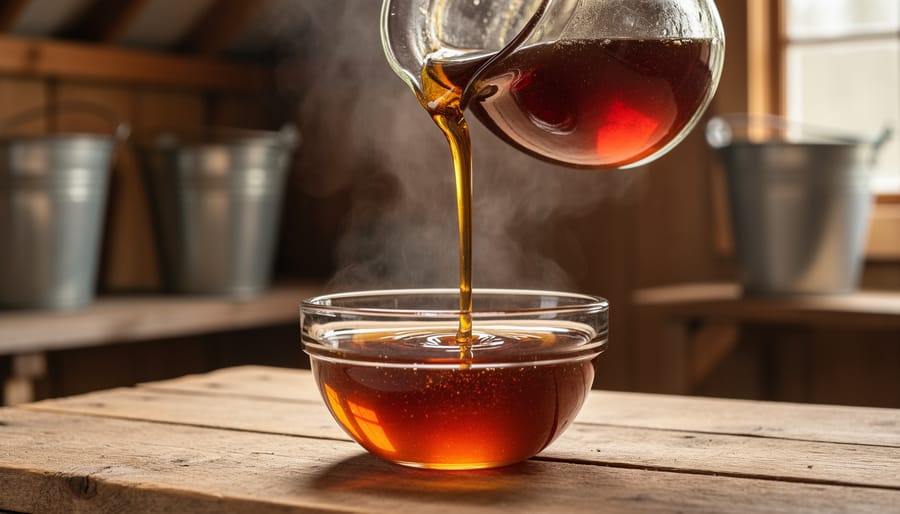
Standing in a rustic Quebec sugar shack in early March, watching steam billow from boiling sap while snow still blankets the forest outside, you realize maple syrup deserves far more respect than it gets as a simple pancake topping. This amber treasure represents centuries of Indigenous wisdom passed down through generations, and Canada produces roughly 75% of the world’s supply.
The production process fascinates me every time I witness it. Sugar maples are tapped in late winter when daytime temperatures rise above freezing while nights stay cold, this temperature swing creates pressure that makes sap flow. It takes about 40 litres of sap to produce just one litre of finished syrup through careful boiling and evaporation.
Understanding the grading system helps you choose wisely. Golden syrup (formerly Grade A Light) has delicate flavour perfect for drizzling, while Dark syrup offers robust taste ideal for cooking. Very Dark syrup, harvested late in the season, delivers intense maple punch that transforms marinades and baking.
Beyond breakfast, creative Canadian chefs incorporate maple into everything from salmon glazes to whisky cocktails and salad dressings. I’ve tasted maple-cured bacon, maple butter on fresh bread, and even maple taffy poured over snow, a sugar shack tradition called “tire sur la neige” that turns visiting a cabane à sucre into a complete cultural experience.
7. Nanaimo Bars, No-Bake West Coast Decadence
I first encountered Nanaimo bars at a café in Vancouver’s Granville Island, and the first bite stopped me mid-conversation. Three distinct layers, a chocolate-coconut-graham cracker base, creamy custard middle, and glossy chocolate top, delivered perfectly balanced sweetness without overwhelming richness. What makes these bars remarkable is that they require zero baking yet taste impossibly decadent.
Named after the Vancouver Island city of Nanaimo, this dessert’s exact origins remain pleasantly murky. Local lore credits various home bakers from the 1950s, though similar recipes appeared in Canadian cookbooks earlier. The city embraced its namesake dessert enthusiastically, even hosting an annual competition judging authentic versions against creative riffs.
The classic combination follows strict proportions: the bottom layer must have enough coconut and graham to hold firm, the custard center needs Bird’s Custard Powder for that distinctive vanilla flavour, and the chocolate topping should crack slightly when you bite through. I’ve tasted mint variations, peanut butter twists, and even savoury experiments, but traditional versions remain superior.
Vancouver bakeries and coffee shops serve excellent Nanaimo bars year-round, though true enthusiasts make the ferry trip to Nanaimo itself, where cafés compete fiercely for bragging rights to the best interpretation of their city’s sweet legacy.
8. Peameal Bacon, Toronto’s Breakfast Champion
I first encountered peameal bacon on a chilly Saturday morning at Toronto’s St. Lawrence Market, where the legendary Carousel Bakery line snaked toward their famous peameal bacon sandwich. One bite explained everything, this isn’t your typical breakfast meat.
Peameal bacon is wet-cured pork loin rolled in cornmeal, creating a golden crust when griddled. Unlike crispy American bacon cut from pork belly, peameal stays tender and juicy with a delicate sweetness that balances the savoury cure. The cornmeal coating adds a subtle crunch without the greasiness you’d expect from traditional bacon.
The name comes from its original pea meal coating, though cornmeal replaced it generations ago. Torontonians have claimed it as their breakfast staple, serving thick slices on fresh kaiser rolls with nothing more than a swipe of mustard, the simplicity lets the meat shine.
At St. Lawrence Market, I watched them slice the bacon thick, griddle it until the edges crisped, and pile it high on a soft bun. That first sandwich, eaten while perched on a market stool, tasted like pure Toronto tradition. The meat was lean but never dry, with that distinctive sweet-savoury balance you won’t find anywhere else in Canada.
9. Caesar Cocktail, Canada’s Spicy, Savoury Answer to the Bloody Mary
Canada’s national cocktail was born in Calgary in 1969 when bartender Walter Chell created the Caesar for a new Italian restaurant opening. He wanted something bold and savoury to complement the menu, blending vodka with clam broth and tomato juice, what would become Clamato, plus Worcestershire sauce, hot sauce, and a celery salt rim. The result became a Canadian obsession that outsells Bloody Marys here by a massive margin.
What sets a proper Caesar apart is that briny, umami-rich Clamato base. The drink hits your palate with savoury complexity before the vodka warmth and spice kick follow. I’ve tasted Caesars across the country, and bartenders treat garnishes as competitive art projects. In Calgary, I’ve seen bacon-wrapped scallops perched on the rim. A Halifax bar served theirs with a mini lobster roll balanced across the glass. Vancouver places pile on prawns, pickled beans, and even sliders.
The best versions balance the tomato-clam sweetness with enough acidity and heat to keep things interesting. Each sip should taste briny and alive, not like watered-down tomato juice. Order one at brunch anywhere in Canada, it’s the weekend ritual that unites the country from coast to coast.
10. Atlantic Lobster, Maritime Treasure
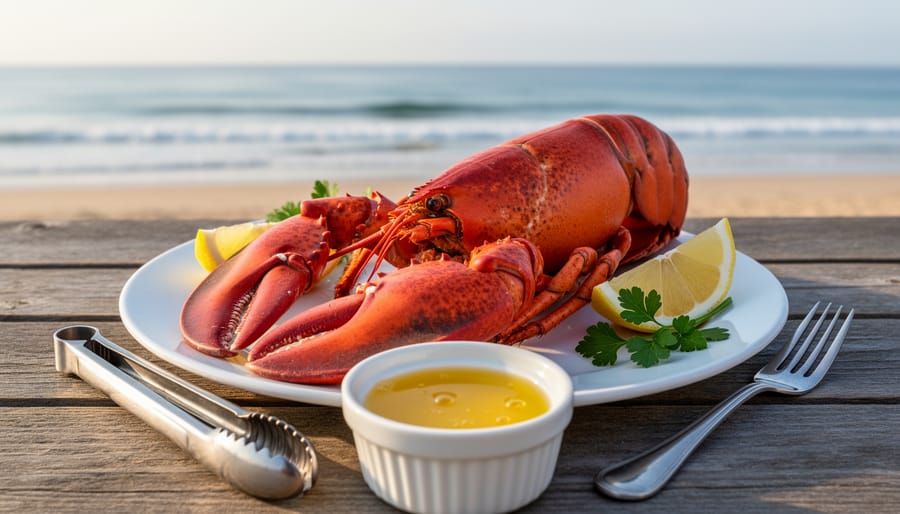
The cold Atlantic waters off Canada’s east coast produce some of the sweetest, most tender lobster you’ll ever taste. These prized crustaceans have fueled Maritime economies for generations, and tasting them fresh in Nova Scotia or Prince Edward Island is an experience no food lover should miss.
I’ll never forget my first lobster boil on a weathered dock in Peggy’s Cove. A local fisherman showed me how to crack the claws and extract every morsel of that pristine white meat. The lobster had been pulled from the water just hours earlier, and the difference from anything I’d eaten before was staggering, sweeter, more delicate, with a clean ocean flavour that needed nothing more than melted butter.
Traditional Maritime lobster rolls keep it simple: chunks of fresh lobster meat tossed lightly with mayo, served in a buttered, toasted bun. You’ll find them at roadside shacks and harbourside cafés throughout the region. For a more refined experience, Halifax and Charlottetown restaurants showcase lobster in everything from bisques to risottos, though I’d argue the simpler preparations let the lobster’s natural sweetness shine brightest. Just be mindful that shellfish allergies carry serious health risks for some travelers, so know your tolerances before diving into this Maritime treasure.
11. BeaverTails, Ottawa’s Fried Dough Pastry
I’ll never forget biting into my first BeaverTail on a frigid January evening beside Ottawa’s frozen Rideau Canal, watching skaters glide past under string lights. The warm, crispy dough was impossibly long and flat, genuinely shaped like a beaver’s tail, and dusted so generously with cinnamon sugar that it cascaded onto my mittens with every bite.
Grant and Pam Hooker created this iconic pastry in 1978, inspired by their grandmother’s recipe for fried dough. What sets BeaverTails apart is the hand-stretched technique that creates that distinctive oval shape and the contrast between the crackling exterior and pillowy interior. While cinnamon sugar remains the classic choice, modern variations include Nutella with banana, maple butter, apple cinnamon, and even savoury options with garlic and cheese.
The original BeaverTail stand still operates on the Rideau Canal skateway during Winterlude, Canada’s premier winter festival. There’s something magical about pulling off a skate glove to hold that steaming pastry, feeling your fingers thaw around it while you watch your breath freeze in the air. The chain has expanded across Canada, but nothing beats eating one where it all began, surrounded by Ottawa’s Victorian architecture and winter revelry.
12. Salmon, Pacific Coast to Atlantic Shore
Wild Pacific salmon from British Columbia represents one of Canada’s most celebrated foods, prized for its deep orange flesh and rich, buttery flavour that comes from cold northern waters. During a Vancouver visit, I watched fishmongers at Granville Island Public Market handle massive sockeye with reverence, explaining the five species, chinook, coho, sockeye, pink, and chum, each with distinct taste and texture.
Indigenous communities have perfected salmon smoking techniques for thousands of years. At a First Nations cultural centre in Squamish, I tasted cedar-planked salmon prepared over an open fire, the wood smoke adding subtle sweetness that complemented the fish’s natural oils. This traditional method remains central to contemporary Indigenous cuisine across the country.
The Atlantic provinces offer their own salmon traditions, though farmed Atlantic salmon dominates eastern markets. Nova Scotia’s Bay of Fundy produces excellent examples, though the flavour profile differs from wild Pacific varieties.
Sustainable fishing practices matter enormously here. Look for Ocean Wise certified restaurants and ask about sourcing. The best preparations let the fish shine, simple grilling with lemon, or the traditional smoked versions served with bannock. Fresh wild salmon season runs May through September on the West Coast, making summer the ideal time to experience this Canadian staple at its peak.
Planning Your Canadian Food Journey
Planning a Canadian food journey requires more strategic thinking than just following Instagram recommendations. I’ve learned through years of cross-country travel that timing, local knowledge, and genuine curiosity matter far more than hitting every hyped restaurant.
- Research seasonal specialties before booking flights, maple syrup season runs late February through April, lobster peaks in late spring and fall, and BeaverTails taste best when eaten outdoors during winter festivals
- Join local food tours during your first day in each city to get insider recommendations and neighbourhood context you won’t find in generic travel guides
- Follow food writers and chefs based in your destination cities on social media at least a month before your trip, their posts reveal current favourites and newly opened spots
- Book accommodations with kitchens or at least mini-fridges so you can store farmers’ market finds, local cheeses, and specialty products to enjoy throughout your stay
- Schedule one splurge meal and several casual spots per city, food trucks, market stalls, and neighbourhood bakeries often deliver more authentic experiences than celebrity chef restaurants
- Download offline maps marking your food destinations before exploring, since many authentic spots occupy unremarkable storefronts you could easily walk past
For photography, natural light transforms food shots. I always request window seats and shoot before touching the dish, one bite ruins that pristine first impression. Markets and street food offer better photo opportunities than dimly lit restaurants, and capturing hands, steam, or the vendor’s smile adds human connection that static plating lacks. Save your phone’s portrait mode for desserts and close-ups where the background blur emphasizes texture.
Key Details to Know
Here’s what you need to know before embarking on your Canadian food adventure:
- Many iconic Canadian foods are seasonal, sugar shacks operate February through April, while fresh lobster peaks from May to November
- Prices vary dramatically by region: a butter tart costs $3-5 in small-town Ontario, while Montreal bagels run $1.50-2 each at traditional bakeries
- Authenticity matters more than convenience, the best poutine comes from Quebec casse-croûtes, not national fast-food chains
- Canadian portion sizes tend to be smaller than American servings but more generous than European standards
- Provincial liquor laws affect where you can buy Canadian whisky or enjoy a Caesar, Alberta has private liquor stores, while Ontario uses government-run LCBO outlets
- Indigenous food experiences require advance booking and respectful engagement, especially at cultural centers and bannock-making workshops
Understanding these practical details helps you plan a realistic food itinerary. I’ve watched too many travelers arrive in Montreal during sugar shack season without reservations, or expect to find authentic peameal bacon outside Toronto. The regional nature of Canadian cuisine means your trip timing and city selection directly impact which dishes you can taste at their source. Build flexibility into your schedule for discovering unexpected local specialties, some of my best food memories came from asking café owners where they eat on their days off.
Common Questions About Canadian Food
Canadian food raises plenty of practical questions for travelers and curious eaters. Here are straightforward answers to the most common queries I hear from readers planning their culinary adventures across Canada.
What makes Canadian food different from American food?
Canadian cuisine blends French, British, and Indigenous influences with strong regional identities, creating dishes like poutine and tourtière that don’t exist south of the border. The food culture emphasizes local ingredients, seasonal eating, and multicultural fusion, particularly in major cities.
Is eating out in Canada expensive?
Prices vary by city and restaurant type, but expect to pay similar to or slightly more than U.S. prices, with Toronto and Vancouver being the priciest. Casual spots like diners and food trucks offer good value, while upscale dining commands premium prices in all major cities.
What foods are completely unique to Canada?
Poutine, Montreal bagels, butter tarts, Nanaimo bars, peameal bacon, BeaverTails, and the Caesar cocktail were all invented in Canada and remain distinctly Canadian. You’ll also find uniquely Canadian takes on bannock and tourtière that reflect the country’s cultural heritage.
Are portion sizes in Canada large?
Portions tend to be generous but generally smaller than typical American servings. Comfort foods like poutine come in substantial portions, while fine dining follows more restrained European-style plating.
Which Canadian cities are best for food lovers?
Montreal and Toronto lead for diversity and quality, Quebec City excels in French-Canadian cuisine, Vancouver showcases Pacific seafood and Asian fusion, and Halifax offers outstanding Maritime specialties. Each city has its own culinary identity worth exploring.
Remember that tipping practices mirror the United States, with 15-20% standard for table service. Most restaurants accept credit cards, though small-town bakeries and food trucks may prefer cash for items like butter tarts or BeaverTails.
What struck me most while tasting my way through Canada wasn’t just the food itself, but the stories people told while sharing it. The Montreal bagel baker who still hand-rolls every piece at 3 AM. The Indigenous chef in Vancouver explaining how salmon connects her to ancestors. The farmer at the Ottawa market who grows the strawberries for his wife’s butter tarts.
Canadian cuisine doesn’t shout for attention the way some food cultures do. It whispers invitations through wood smoke from sugar shacks, sizzles quietly in peameal bacon on Toronto griddles, and bubbles contentedly in poutine gravy across Quebec. These dishes are humble, honest, and deeply rooted in the places that created them.
I’ve learned that you can’t truly understand Canadian food from a single city or a weekend trip. Poutine tastes different when you’re eating it in a Montreal diner at midnight than it does in a chain restaurant elsewhere. Bannock means more when prepared by Indigenous hands. Lobster tells a different story on a Nova Scotia wharf than it does on a white tablecloth.
The foods on this list are starting points, not the full story. They’re reasons to explore Canada’s diverse food and drink scene, to venture beyond the familiar, and to let your taste buds guide you through a country that’s still discovering its own culinary identity. That’s the beauty of it: Canadian food culture is alive, evolving, and always worth another visit.